A strange feeling...

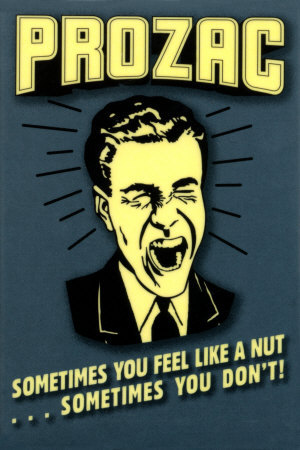
When I saw my psychiatrist on Wednesday, she decided to raise my Prozac because I was feeling a smidge better but not all the way. I had been on a higher dosage before, and tolerated it just fine, so she thought that rather than prolong the misery, she should just try the higher dosage and see what happened. I took the first higher dose on Friday, and felt drained and dopey. Ditto for yesterday. I kept thinking "Must blog...must blog...must sleep..." and, suffice to say, sleep won.

Today, I woke up bright and early (for me, on the weekend)- thankfully I slept later than yesterday when Aria saw a bird right outside my window at 8:30am and just about went bonkers. She was hissing and "chirping" and running around the bed and...good morning, Your Royal Fuzziness. Thanks for the wake-up call. I spoke with my good friend IrishUp this morning as well, as we worked on a project for FEAST, and it was nice to hear her voice.

Then, as I was getting dressed and getting ready to make my weekly grocery run, it struck me: I felt strange. Like really strange. The weather is gorgeous out. Aria was acting freakishly cute. Though I wasn't looking forward to going grocery shopping, I wasn't exactly dreading it either. My body image isn't spectacular, but it's been worse.

I realized: could this be happy?
Could it?


When I was in residential treatment about 2.5 years ago (has it really been that long?), I remember when the other SSRI started to kind of work. I remember being utterly convinced that I was manic. That this chatty feeling, these giggles, were NOT NORMAL. It had to be pathological. I was not upbeat and talkative.

I explained these freakish symptoms to my therapist who looked at me and said: "Umm, honey, I think that's called happy."

Oh.

I guess it kind of drives home the point of how long I've been depressed, when having a good mood feels almost wrong. That it feels pathological, that I must be bipolar if I'm having a fraction of a happy thought.

But it isn't. It can be normal, just as ordering pizza can be normal. It's something I am hoping I will be getting used to.

The zone

Though people have claimed to be "addicted" to darn near anything (herbal tea, Sudoku puzzles, hitting the snooze button, and cats are several of my non-addictions), it's pretty widely accepted that gambling is a bona fide addiction. And with any neurological talk of addiction, you pretty much have to talk about dopamine (a good if slightly technical explanation is here). Performing your addictive behaviors, or even just anticipating getting a "hit" later on, releases dopamine in your brain, which makes you feel good. So you do the behavior more, although less dopamine is released as your brain and body begin to tolerate what you're addicted to. So you increase the amount you use, and the cycle is off and running.

I have no doubt that addiction and dopamine are closely linked, and that there are also links between eating disorders and dopamine*. But new research from Natasha Schull at MIT found that people addicted to gambling aren't motivated by the "hook" of a possible big win. That may have drawn them into the habit to begin with, Schull said, but it's not what keeps them going. What keeps them going is their entrance into what Schull calls "The Zone." The zone is

a dissociative state or trance in which players lose a sense of time, space and physical embodiment, consumed totally by the spinning numbers, symbols or electronic card hands before their eyes. Because gambling machines don't require social interaction (as is the case in table games such as poker), they let people get into and stay in a state that is not dissimilar to, but far more intense than, watching TV; players describe the zone as a compelling, mesmerizing condition of intense concentration -- an almost out-of-body experience. Heavy machine gamblers come to crave this state, says Schull.

"It's about wanting to keep playing," she says. "People will actually get disappointed or irritated if they win a jackpot because it may freeze up the machine and interrupt their flow. Then they have to sit there until they lose it. Walking away with the jackpot is not an option" in their state of mind.

I've played one slot machine in my life- a nickel machine, and I put one nickel in, got nine back, and quit while I was ahead- but I am very familiar with the zone. That, to me, was one of the biggest draws of the eating disorder. I've been around the block enough times to know that losing weight won't make me happy and make me into a different person. I know that not eating will make me feel physically terrible in the long run. I know there will never be a magic weight that will finally make me feel "thin" and okay and good enough and relieved.

But damn don't I miss that zone. The blinding haze of starvation. The single-minded focus of exercising until I wanted to drop. The obsession with food. It distanced me from the world. I was interviewing for jobs several years ago and wound up the last of my friends without a permanent position. After getting turned down for a position yet again, I just thought "I've lost X lbs in the week since I last spoke with you- oh well about the job." It's partly a self-esteem thing (at least I'm good at losing weight), but the other part is the zone.

I almost feel half-dissociated when I'm in the throes of the eating disorder because my connection with reality is blunted at best and gone at worst. All that matters is eating less and exercising more. All that matters is making that number on the scale go down. So the normal, day-to-day stresses kind of fade into background noise.

Eating would wrench me out of the zone, back into the dark, noisy, smoke-filled casino that is my life. This was why I couldn't stop starving even after I reached my initial "goal weight." The zone was what mattered. If I couldn't be in the zone, then my brain tried to find any way in the book to get back there, even just a little bit. No slot machine in a casino? Well, maybe there's one in Safeway, or at the gas station, or on the internet. Maybe I can shove my snack into my pocket or lie about that bowl of cereal I ate for breakfast.

Maybe the zone is nice, even nicer than reality at times. But if all you see of life is the inside of a casino, you're missing out on a lot.

*Yes, I do have to bring everything back to eating disorders if for no other reason than I'm assuming that's why you're reading.

MeMe Roth hits new low...

I didn't think MeMe Roth could get any worse. I really truly didn't. This is, after all, a woman who threw away children's ice cream toppings. But besides the alarming visual similarities to conservative shrill Ann Coulter, MeMe Roth now has a bunch more verbal ammunition to make the similarities known.

This little piece in Jezebel (h/t Libby) absolutely blew me over: Anti-Obesity Activist MeMe Roth Compares Eating to Rape

Roth says:

The defense has been made in the case of sex criminals that there is pleasure on the part of the victim. The same is true with what we're doing with food. We may abuse our bodies with food, but it's incredibly pleasurable. From a food marketer's point of view, when your quote unquote victim is so willing and enjoying of the process, who's fighting back?

Yes, you read it right. When a fat person eats, Roth thinks they are effectively raping themselves. So if I tell her go to f*ck herself, is that like asking her to lick her elbow?

The Jezebel piece is actually an excerpt from an article in the British newspaper The Guardian titled "The Woman Who Hates Food," which I think is an interesting choice of headlines. I don't know if Roth hates food, but she does hate people who eat food. Which is basically everyone, including (considering she's still alive) herself.

Though Roth protests she's never been anorexic, she has some decidedly unhealthy attitudes toward food. She insisted on meeting interviewer Gabby Wood "after lunch," whereupon the following dialogue ensued after Wood asked Roth what she actually ate:

She squirms visibly. "You're taking me where I don't want to go ... What works for me doesn't work for a lot of people."

Well, you've said that, I insist, so taking that into account: lunch? Roth hesitates. "I discovered when I was in college that I work best when I get a workout in and eat after that. Sometimes I'll delay when I eat until I get a workout in. But I don't let a whole day go by without running four miles."

OK, I go on, but supposing you couldn't work out until four o'clock in the afternoon - would you not eat until after that?

"I might."

I look at my watch. It's 3.30pm. Alarm bells start to ring in my head. How about today, I ask. Have you eaten at all today?

Roth is a little quiet.

"No," she says.

There is a pause.

"But I feel great!"

In the end, Anna N* at Jezebel says it best in her article:

Roth may not be anorexic, and she may not think of what she does as dieting, but if "what works for her" is not eating anything until after 3:30, she's right that it's not going to work for most people. Nor should it. To liken the pleasure one gets from food to something as toxic as sexual assault isn't just illogical and insensitive — it also demonizes something that nourishes, brings people together, and produces some of the greatest and most uncomplicated joy in life. Rather than accept food for what it is — something that, like many good things, is wonderful in moderation and problematic in excess — Roth wants people to think of it as some kind of evil rapist who will make us fat and therefore shameful. It's a judgmental, unhealthy, and ultimately unsustainable way to live.

*Who linked to my piece on Daphne Merkin's story on depression last week and sent about a bazillion people my way- thanks!

Altered reward response in bulimia

Last year, Walter Kaye and colleagues published a report that found women who had recovered from anorexia showed an altered reward response, which was demonstrated in difficulties distinguishing between positive and negative outcomes. In other words, someone with anorexia didn't show positive feelings when they "won" at a simple game: they only showed a lack of feelings that accompanied "loss." This blunted reward (as demonstrated by a lack of response in the anterior ventral striatum) means that anorexics primarily strive to avoid negative outcomes, which is reflected in their obsessive, perfectionistic behavior*. In contrast, the recovered anorexic women showed an over-activation of the caudate nucleus, the area of the brain involved in planning future actions and evaluating long-term consequences.

Now, Kaye et al. have done a similar study in women who have recovered from bulimia, and they also found an altered reward response, though slightly different from the one identified in anorexic women.

One of the main neurotransmitters involved in reward response is dopamine, the so-called "feel good" chemical, and abnormalities in dopamine response has been found in people with binge eating behaviors. So Kaye and co. hypothesized that women recovered from bulimia would have an under-response of the caudate nucleus, the opposite of the recovered anorexics, as bulimia tends to be characterized by difficulties in impulse control.

Instead, the researchers found that the bulimic women, like the anorexics, were unable to distinguish a positive outcome from a negative outcome. Whether the women "won" or "lost" at a card guessing came, their brains responded the same. What distinguished this group from the anorexic women was that they did NOT show an over-activation of the caudate nucleus. Kaye et al. conclude the following:

A recent study reported that behavioral/motoric impulsivity is linked to binge-eating type eating disorders in general, but that the nonplanning dimension of impulsivity was only characteristic of BN individuals. Whether the different activity pattern finding in [recovered bulimic women] reflect some difficulty in foreseeing or integrating consequences is conjectural, but may offer important clues for understanding the biology this behavior. It is worth noting that our group previously found that [recovered anorexic] participants had elevated [caudate nucleus] activation in response to negative and positive feedback, perhaps reflecting symptoms of worrying about feedback and excessive need to control/plan consequences of their actions.

Both [recovered bulimic] and [recovered anorexic] individuals had elevated anxiety and harm avoidance scores, and neither group had altered novelty seeking or sensation seeking scores. In this respect, [recovered anorexics] and [recovered bulimics] appear to be similar. Still, novelty seeking scores were positively associated with [anterior ventral striatum] activation for the win condition within the BN group.

Although this study is still rather preliminary, it begins to provide some clues as to the neurobiology of bulimia.

*Um, hi, Dr. Kaye. Thanks for making me feel that you're looking inside my brain right this very instant! While you're at it, could you remind me where I put my car keys again? Oh, right behind that gob of earwax? Thanks. I knew they were around here somewhere...

Fantastic video on changing your thoughts

It's only about 2 minutes, but it is a fantastic, easy to understand introduction on how to change your mind and change your brain.

Though the author just talks about depression, I think it applies very much to eating disorders.

High cholesterol in anorexia nervosa

One of the (many) paradoxes of anorexia is that the excessive weight loss that accompanies the disorder often results in high cholesterol levels. This seems to go against what many doctors and researchers say about cholesterol: decreasing food and fat intake as well as increasing exercise should decrease cholesterol levels, not raise them.

It turns out that this high cholesterol (formally known as hypercholesterolemia) also happens to starving people, and is a well-known side effect of malnutrition. The question that remains, then, is why? Why this paradoxical effect?

Let me back up a bit and explain what cholesterol is and what it does. Cholesterol "is a lipidic, waxy alcohol found in the cell membranes and transported in the blood plasma of all animals. It is an essential component of mammalian cell membranes where it is required to establish proper membrane permeability and fluidity." Cholesterol is hydrophobic, meaning it doesn't dissolve in water or blood, so it is transported in the body by lipoproteins. Your total cholesterol count is a combination of triglycerides, low-density lipoproteins (LDLs, aka "bad" cholesterol) and high-density lipoproteins (HDLs, aka "good" cholesterol). Both LDLs and HDLs transport fats along with cholesterol. The lipid hypothesis holds that there is a causal link between high intake of saturated fats, hypercholesterolemia, and heart disease, promulgated by none other than Ancel Keys, he of the Minnesota Starvation Study.

So. What does this all mean?

Besides just having unusually high levels of total cholesterol, patients with anorexia were found to have unusually high levels of an enzyme called cholesterylester transfer protein (CETP), which swaps cholesterol and fat molecules between the different lipoproteins. The researchers speculated that low levels of thyroid hormones and low breakdown of existing cholesterol contributed to high cholesterol levels, and that "CETP activity increases cholesterol turnover as an adaptation to its low intake." The highest levels were seen amongst AN patients who also binged and purged. In severely malnourished AN patients, however, cholesterol levels and CETP activities drop dramatically.

Other studies have suggested that starvation results in the increased synthesis of lipoproteins. It could also be that these lipoproteins are transporting fats in the body, which the body is relying on as fuel due to insufficient food intake. If the body is going to rely on fat as fuel, it needs some way to mobilize those fat molecules and get them to a location where they can be broken down effectively. This could perhaps explain the abnormal rise in cholesterol levels. As body fat is essentially depleted in the severely malnourished AN patients, the body may rely more and more on breaking down organ and muscle tissue, thus decreasing the need for abundant lipoproteins.

Regardless of the reasons for hypercholesterolemia during anorexia, it is NOT an indication that the sufferer needs a low-fat or low-cholesterol diet. With sufficient foot (and fat!) intake, cholesterol levels typically right themselves rather rapidly.

Coping mechanism or adaptive function?

The subject came up in my therapy session on Monday- was an eating disorder a coping mechanism or did it instead simply have an adaptive function? I've been mulling it over since then, following various thoughts to and fro, trying to put my finger on the exact difference between the two, and where an eating disorder really lay on that spectrum.

When I was first diagnosed in 2001, the basic mantra I was given was that anorexia was a "maladaptive coping mechanism" and that recovery meant I would need to learn better ways of coping than starving, purging, and exercising. This I understood--if I was to get better, I couldn't keep abusing my body so horribly and expect to live. But my understanding of anorexia-as-coping-skill got quite muddled when the rubber hit the road.

The sessions with my ex-therapist would go something like this: she would ask why I was restricting, I would say I don't know, I'm fat, it seemed like a good idea, I eat too much, etc. Then she would ask me to think about what happened that might have "triggered" this. Sometimes there would be a specific event, sometimes there wouldn't. But I never deliberately thought: gee, my life is stressful and anorexia would help me cope. Let's stop eating.

Yet I couldn't totally deny the fact that my eating disorder had a "purpose," as it were. I felt better when I wasn't eating. I just...did. It loosened the straitjacket of anxiety and depression that held me captive, only to entangle me in something far worse. Eating the same paltry food each day felt soothing, and the hunger pangs became confirmation that I was at least doing one think in my life right. When my depression got bad, I literally lived for the hope that tomorrow I would weigh less. That got me out of bed in the morning. The exercise and accompanying endorphin rush hit both anxiety and depression at once.

But I still wasn't coping with life, and I knew it. I was trying to seal the hole in the Titanic with bubblegum- a noble endeavor, perhaps, but entirely futile. The ship was sinking, I was aware of this, but at least the bubblegum made me feel like I was doing something.

I don't consider my eating disorder a coping mechanism any more, because I don't see it as a choice. A coping mechanism is something you choose. I fell into the eating disorder because of the way I was wired and because of the culture in which I live, but none of this had anything to do with helping me cope. Anorexia had a lot to do with self-medication and my brain somehow figuring out the adaptive functions of prolonged malnourishment.

Perhaps these thoughts are little more than semantic hair-splitting; perhaps they're not. To me, the main difference is how much control and choice you have over your eating disorder. I wouldn't say I have none, because I obviously do right now. Yet when I am in the thick of anorexia, my behavior takes on a life of its own and I just kind of hold on. It's as if my brain has been hijacked, as sure as those planes on 9/11.

It's also true that I do need to learn better coping mechanisms so that there won't be as many adaptive functions for the eating disorder to fill. If I can learn to handle stress better, there won't be that pressing need to have it numbed by starvation. If I can learn better self-esteem, maybe I can find something more important to get out of bed for than the hopes of losing weight. If I can find fulfillment in life, maybe I can enjoy that full feeling after a meal without immediate thoughts of guilt and recrimination rushing in.

There is a place for learning coping mechanisms in recovery--but it's not to replace the anorexia.

A not-so-healthy-addiction

Back during my exercise zeitgeist, many people congratulated me on my efforts. "Wow, you're so dedicated," they would gush. I said something non-committal, usually along the lines of "Mmmm." Inside, however, I cringed. This isn't fun, I wanted to say. It's not virtuous, and I'm not dedicated. How could I be "dedicated" to something I felt obligated to do? It's like saying I'm dedicated to breathing or peeing because I do both so regularly. And it would have been just as easy to stop those as it would have been to stop exercising.

So it was with great joy that I stumbled across the following post: A healthy addiction? Not for me. You know that scene in the movie When Harry Met Sally, where Meg Ryan does that "Yes! Yes! YES!!" in the restaurant? That's kind of what I was thinking when I read this, sans drama. And yes, you can have what I'm having if you read on or click the link.

It has been nearly 11 years since I had a drink or a drug but I still struggle with my exercise addiction. Actually, I’m lying. I don’t struggle with my exercise addiction. My therapist struggles with my exercise addiction. That’s the problem. Despite years of sobriety, my addict brain can still convince me that this addiction is better than that addiction. Sure, I look a heckuva lot better than a crack addict, but we are both addicts. Any addiction - to drugs, alcohol, food or behaviors - is toxic to me, my depression and bipolar.

I like to think that today I have a handle on my exercise addiction. Back in the days when I did triathlon and ran marathons I worked out six, sometimes seven days a week. Sometimes twice a day. I spent outrageous sums of money on bikes and shoes and a ridiculous amount of time training. Just like a meth addict, I surrounded myself with other exercise addicts. Except we were the healthy addicts. Yea, right.

And I guess that's what irritates me: exercise is seen as so essentially healthy (read: virtuous, dedicated, moral) that most people cannot comprehend that one can possibly exercise too much. Yet you can. You can also exercise for all the wrong reasons. You can become hooked on the endorphin rush, become dependent on the rivulets of sweat and the sweet stale stench of the locker room.

Which is why I so treasure this one comment I got from a co-worker as we were riding the elevator down- him to the lobby, me to the basement gym.

"Whatcha doing?" he asked.
"Oh, just going for a little workout," I replied.
"That doesn't sound like fun. I'm going to visit the National Portrait Gallery," he said.
I wanted to say "Thank you for your honesty," but I just smiled and said "Have a good time!"

On food as medicine

I blog a lot about how food is medicine for eating disorders. Of course, it's not the only medicine: therapy (good therapy) is important, and medications also have their place for some people. Plus there's always the healing tincture of time as new patterns are laid down in the brain.

But the importance of food in cancer treatment has been overlooked--until now. The Cancer Treatment Centers of America in Philly have hired a Certified Master Chef for their cafeteria.

With cancer, you've got to "bring a lot more nutrients to each spoonful of food," Certified Master Chef Jack Shoop is learning.

Malnutrition is a big problem in cancer patients, and it plays a role in one-fifth of cancer deaths. "Yet nutrition too often is an afterthought until someone's already in trouble," says the USA Today article.

Maybe this is my ED history talking, but I don't understand our society's blithe tolerance of malnutrition--not in people with eating disorders, and not in people with cancer. We can't get it through our thick skulls that a little malnutrition is somehow okay, that it won't hurt. But nausea and lack of appetite are known problems with many cancer treatments, so it's not like doctors should be caught off guard when a patient finds it difficult to eat.

The [National Cancer Institute] defines patients as at-risk when they've lost more than 10% of their usual weight. Other research suggests that patients who lose more than 5% of their pre-cancer weight have a worse prognosis than people who can hang onto the pounds.

"Patients who are well-nourished as they're going through treatment have shorter hospital stays, are better able to tolerate treatment," not to mention have better quality of life, says Colleen Doyle, nutrition chief at the society, which offers nutrition advice through its hot line at 1-800-ACS-2345.

I'm glad the NCI has this hotline and is tackling the problem of malnutrition head-on. It would be nice if they didn't have all of the obesity-is-giving-you-cancer-OMG stories, but I'll applaud what is good.

posted under | 2 Comments

Self-harm and glucose metabolism in women with EDs

Self-injury (such as cutting or burning oneself) is fairly common amongst people with eating disorders- approximately 25% to 45% of people with eating disorders self-injure, and approximately half of those who self-injure also have eating disorders (full article here). Many people report a sense of dissociation while self-harming, a desire to turn emotional pain into physical pain (ie, "real" pain), and also that this behavior reduces anxiety. Whether self-harm is from issues relating to impulse control, a more compulsive pattern of behavior, or something else entirely, the amount of overlap between self-injury and eating disorders is significant.

An interesting new paper from the journal Psychoneuroendocrinology looked at the relationship between self-injury and glucose metabolism in women with eating disorders, and what they found was significant. Women engaging in self-harm behaviors were given an oral glucose tolerance test, in which they were asked to drink a sweet solution to measure how the body handles sugar. The self-harming women who also had an eating disorder had higher levels of blood glucose after the test, but also higher levels of a hormone called glucagon.

Glucagon is essentially insulin's opposite: when the blood sugar is low, the pancreas secretes glucagon to prod cells into breaking down long chains of carbohydrates called glycogen into small sugars that can be released into the bloodstream and readily used by the body. When blood sugar rises after a meal, the pancreas secretes insulin, which stimulates cells to pull excess sugars out of the bloodstream and store them as glycogen for a rainy day*.

Besides low blood sugar, several other factors can stimulate the release of glucagon, including epinephrine (aka adrenaline), which is involved in the fight or flight response. Though I was unable to find any specific studies linking high levels of epinephrine and self-injury, it's certainly plausible to think that people who self-harm would have higher levels of epinephrine, especially right after an incident where such behavior occurs. Alternately, if high levels of glucagon also stem from high levels of epinephrine, the sufferer may be caught in a cycle of self-harm during episodes of low blood sugar.

For instance, a common pattern in those who binge and purge is binge-purge-self harm, where the self-harm typically occurs after the completion of the binge/purge cycle. After a binge, blood sugar goes up and glucagon levels go down. After a purge, blood sugar goes down, and glucagon and epinephrine levels go up.

No one knows at this point where the relationship between self-harm and glucose metabolism lies on the cause/effect scale. Certainly there is a feedback cycle between all of these systems. But one good point to keep in mind is the importance of helping sufferers regulate blood sugar levels by frequent meals and snacks that involve complex carbohydrates, proteins, AND fats. Food is medicine for the eating disorder, but it also might be true for self-injury.

*Aren't you glad I paid attention in my 8am biochem lecture 10 years ago?

(cross-posted at FEASTing on Research)

A little bit of double talk

The advice is good, but oh the irony!


Watching this video, I just kind of shook my head. I mean, the advice is good ("love yourselves, ladies!") but the person from whom it springs might want to think about the other advice she gives, too. I mean, Jillian Michaels preaching body love? Not that I watch The Biggest Loser (I've lived it, I don't need to see more), but the segments that I've seen don't indicate that she's telling the contestants to accept their bodies.

Oh...that's right. Accept your body but only if you're not fat. And not until you've bought a Jillian Michaels exercise DVD. I get it.

Honey, your entire fortune is predicated on the fact that people don't like how they look. There's some lip service to health, but most "motivation" I hear is about appearance. If people suddenly accepted their bodies, you would be out of a job. At least admit it.

Are people really that disconnected from their own messages? Do the execs at Weight Watchers and Slim Fast really buy their own schtick ("we're not a diet, we're a Lifestyle Change!"), or do they know the rest of us are a bunch of suckers?

"Fat talk" in women serves a variety of purposes, but mainly as a bonding device, a way for women to connect. One of my therapists in treatment called similar things "bonding through bitching." Women don't dare bond through talk of their achievements, so they bond through their problems, body and otherwise. Bitching is okay; bitchy isn't. Saying how fat we are or how ginormous we feel makes us feel like one of the gang.

But you don't need to win The Biggest Loser in order to stop with the fat talk and start accepting yourself and your life and your accomplishments. Start now.

Share an accomplishment from today in the comments- no "it was just..." or "only..." and such. What did you accomplish today? I'll start: I went to the grocery store and got what I needed without a meltdown. Yeah!

Empty, full, and back again

A powerful music video of the life of Shelby Starner, a young musician who died from bulimia in 2003.


(Thanks, Greg, for alerting me to this!)

posted under | 3 Comments

Whose fail is this anyway?

Whose fail is this? I don't think it's the woman's- I think it's ours for being so judgemental.

fail owned pwned pictures

What do you think?

posted under | 4 Comments

How to hate your eating disorder

Okay, this sounds pretty basic. I know my eating disorder is not me, and that I am not my eating disorder. I know that I didn't choose to become anorexic and that it wasn't my fault I got ill. My disease was the result of genetic predisposition, a culture of avid dieters and thin-is-in, and some really bad luck. I get that. And yet, I still feel almost no emotion towards having had anorexia. I feel plenty of emotion towards ME for being short-sighted enough for starting down that primrose path turned sewer, but not towards the illness.

I mean, my eating disorder has made a mess of my life, and I still can't get angry at my illness. Me, yes. Ed, no.

Which is why a blog post titled "Hating the illness, not the afflicted" likely struck home with me. Christine Stapleton writes:

It has taken years, and many raging swings of a foam bat against a pillow, to separate the disease from the nasty words, neglect and embarrassment caused by my own alcoholism and the alcoholics in my life. I think of my parents’ cancer, and how easy it was to hate their cancer and not them. But I hated my father’s alcoholism - and sometimes I hated him. I wish with all my might that I had been able to separate his alcoholism from him, the father who loved me immensely - the very best he could.

Today, as I wade through the wreckage of another alcoholic in my life, I will try to separate the disease from the person. Alcoholism is an explanation, not an excuse. I will carefully walk that line between allowing myself to be hurt and hurting the still sick, and suffering alcoholic. And I will pray that I can see that line today and stay on it.

Separating yourself from an illness that seems like you but isn't, that causes you to behave irrationally, to distance yourself from loved ones, won't be straightforward. Because the eating disorder? It seemed like me. It was me. A sick me, but still fundamentally me. Now, it's a recovering me, the same me that was sick and demented and angry and irrational.

I haven't forgiven myself for my eating disorder, and maybe it's about time.

The enduring power of belief

This article reminded me of the power of belief: "The science of voodoo: When mind attacks body"

Take Sam Shoeman, who was diagnosed with end-stage liver cancer in the 1970s and given just months to live. Shoeman duly died in the allotted time frame - yet the autopsy revealed that his doctors had got it wrong. The tumour was tiny and had not spread. "He didn't die from cancer, but from believing he was dying of cancer," says Meador. "If everyone treats you as if you are dying, you buy into it. Everything in your whole being becomes about dying."

The idea that believing you are ill can make you ill may seem far-fetched, yet rigorous trials have established beyond doubt that the converse is true - that the power of suggestion can improve health. This is the well-known placebo effect. Placebos cannot produce miracles, but they do produce measurable physical effects.

And this really drives home the point about the importance of having a clinical team who really believes in you and your ability to recover. One of the most powerful things about my current therapist is that she believes both in the power of recovery and in the reality of the day-to-day slog through life. That struggles are normal and to be expected, but they're NOT a sign that I will never get better.

Having parents who believe in my ability to recover has been just as important, if not more so. I don't always like to admit it, but I still need people who will believe for me that I can recover, when I still am suspended in cynical disbelief. I need my parents and my therapist and my friends to believe for me, when I cannot.

Many times (even now), I doubt my ability to ever leave anorexia behind. It's like spending a long evening in a smoky bar. If it were just a few minutes, my coat would smell. An hour or so, perhaps my hair. But if you stay long enough, you realize that your underwear reeks of smoke.* The smell seeps in and permeates everything you have. And I have this wardrobe full of smoky clothes.

I don't know if things like hope and confidence are part of the placebo effect or not, but it almost doesn't really matter. They're still important, and they still mean a hell of a lot.

*Hypothetically. I don't typically sniff my undergarments.

posted under , | 4 Comments

Weight over health- we have it backwards

I was refreshingly surprised when I saw this AP news article last night: Worry over weight: Poll finds health disconnect. It summarized what I've realized since the days of the Big Fat Loser contest over a year and a half ago now, that women say they're trying to lose weight for health reasons, but it's really all about appearance.

There's a big disconnect between body image and true physical condition, an Associated Press-iVillage poll suggests. A lot of women say they're dieting despite somehow avoiding healthy fruits and veggies. Many others think they're fat when they're not.

"The priorities are flipped," says Dr. Molly Poag, chief of psychiatry at New York's Lennox Hill Hospital.

She points to women athletes as much better role models than supermodels: "There's an undervaluing of physical fitness and an overvaluing of absolute weight and appearance for women in our culture."

Half don't like their weight, even 26 percent of those whose body mass index or BMI — a measure of weight for height — is in the normal range. But just a third don't like their physical condition, even though being overweight and sedentary are big risk factors for Type 2 diabetes, heart disease and other ailments.

The poll found women putting in a median of 80 minutes of exercise a week, meaning half do even less. The average adult is supposed to get 2 1/2 hours of exercise a week for good health.

And just 8 percent of women ate the minimum recommended servings of fruits and vegetables — five a day. A staggering 28 percent admit they get that recommended serving once a week or less.

The ladies I worked with (and most dieters I've talked to) might say they want to lower their cholesterol or blood pressure, but what they use for "thinspiration" isn't an image of an unclogged artery or a blood pressure reading of 120/80. They look at models, those size 8 pants, that skinny chick who works in the cubicle down the hall. Commercials are now telling us to "get in shape for summer" because it's "bathing suit season!" The "get in shape" message is really in the name of looking hot in a bikini.

Eating disorders aside, normal-skinny doesn't automatically mean healthy, stresses University of Houston sociologist Samantha Kwan, who studies gender and body image.

"Someone who is fat or even overweight can be healthy if they have a balanced diet and are physically active," Kwan says. "Our culture really does put a lot of pressure on women to look a certain way," taking precedence over health measures.

If we really want to focus on health, maybe we should take weight loss out of the equation.

The Troubling Allure of Eating Disorder Books

Many people with eating disorders are well-versed in the ED pop lit, especially the personal stories and novels. Some of it is, of course, the age of many sufferers; most adolescents wouldn't be working their way through a tome on medical complications or feminist meanings of starvation. The other part is much more subtle and more sinister. A lot of times, the sufferer will, consciously or not, read a book to trigger herself.

This is something that people outside the ED world just don't get. Why would you want to learn how to kill yourself better? The answer is that it's just the nature of the disease. I never felt I was a "good enough" anorexic, and my disordered brain was a sponge, soaking up ways to eat fewer calories and get rid of more. I never really went out of my way to find these "tips," usually stumbling across them in my reading (I was the person reading those research-oriented tomes), and by the time I realized I actually had an eating disorder, I was sick enough that most of them had already occurred to me.

There has been much in the news about the new novel Wintergirls, about a high school senior with anorexia. To be honest, I haven't read the book and have no desire to. I know plenty about the inner experiences of anorexia--I don't need to read more about it.

But it's an interesting issue.

The subject was addressed on the Well blog today, when blogger Tara Parker-Pope asked the question "In writing about eating disorders, are authors, unwittingly, creating an alluring guidebook to the disease?"

It's something I realize I have done with my memoir, and it's not something I'm proud of. I went to great efforts during the writing of my second book to tone down as many of the lurid details as possible while still maintaining a narrative. People with eating disorders can be triggered by a wide variety of things, and these triggers are everywhere: supermarket tabloids, The Biggest Loser show, nutrition and "healthy eating" articles, you name it. Part of recovery is learning how to manage these triggers, whether it's knowing that images in magazines are Photoshopped, or eschewing those magazines entirely.

Besides, "Wintergirls," the main "bible" of the eating disordered world is "Wasted" by Marya Hornbacher. I'll admit, I own a copy. My friend in college (who also had an ED) gave it the most succinct and accurate review: "I finished it and then said, well shit, and made myself barf." Like most ED books, it's a train wreck of a book- the writing draws you in and you just keep going and waiting for the wreckage.

Would I be worried if my kid came home with a book about eating disorders? You bet. I read lots of novels about anorexia when I was younger and found them absurdly attractive, in that train wreck sort of way. Perhaps I was recognizing my underlying wiring in the characters. I don't know. I don't believe in banning books but I do believe in being cautious about what I encourage my friends and family to read, especially when books can inadvertently play into the ED mindset. Laura has some good thoughts here.

But I would like people to read more about eating disorders- more of the up-to-date scientific information on causes and treatments. If I really wanted people to know about eating disorders, I wouldn't recommend a novel with the stereotypes about the cold mother and distant father (all gleaned from reviews of "Wintergirls"), no matter how well written or how "haunting" it seemed. I would recommend Walt Kaye's website and FEAST and Maudsley Parents.

Happy Mother's Day!

I got a semi-unexpected visit from my parents this afternoon- I learned they were heading down this way on Thursday, and they offered to stop by for a visit. Of course, I said yes, and we had a very nice dinner at a local restaurant.

So I wanted to say "thanks" and "I love you" to my mom very publicly here on my blog. For all of the goofy emails and voice messages she leaves me (none have yet made it onto this site, but there's still time, Mom. There's still time.) or the wacky forwards or the random bottle of Tums she stuck in my Christmas stocking one year just so it would be all nice and full like my brother's, she's a real gem.

All these years of the eating disorder, and she didn't leave me. Then she even let me come back home and fed me like I was a toddler, all over again. I'm amazed. I'm in awe.

I love you, Mom.

(okay, on cue: awwwww...)

posted under | 8 Comments

A Journey Through Darkness

In her essay, A Journey Through Darkness, Daphne Merkin writes of her lifelong battle with depression.

Surely this is the worst part of being at the mercy of your own mind, especially when that mind lists toward the despondent at the first sign of gray: the fact that there is no way out of the reality of being you, a person who is forever noticing the grime on the bricks, the flaws in the friends — the sadness that runs under the skin of things, like blood, beginning as a trickle and ending up as a hemorrhage, staining everything. It is a sadness that no one seems to want to talk about in public, at cocktail-party sorts of places, not even in this Age of Indiscretion.

Much of her piece focuses on how she ended up at a psychiatric research hospital in New York City, on a unit housing depression patients and those with eating disorders. Her take on her eating disordered inmates was interesting. Merkin said this:

From the very first night, when sounds of conversation and laughter floated over from their group to the gloomy, near-silent table of depressives I had joined, I yearned to be one of them. Unlike our group, they were required to remain at lunch and dinner for a full half-hour, which of necessity created a more congenial atmosphere. No matter that one or two had been brought on to the floor on stretchers, as I was later informed, or that they were victims of a cruel, hard-to-treat disease with sometimes fatal implications; they still struck me as enviable. However heartbreakingly scrawny, they were all young (in their mid-20s or early 30s) and expectant; they talked about boyfriends and concerned parents, worked tirelessly on their “journaling” or on art projects when they weren’t participating in activities designed exclusively for them, including “self-esteem” and “body image.” They were clearly and poignantly victims of a culture that said you were too fat if you weren’t too thin and had taken this message to heart. No one could blame them for their condition or view it as a moral failure, which was what I suspected even the nurses of doing about us depressed patients. In the eyes of the world, they were suffering from a disease, and we were suffering from being intractably and disconsolately — and some might say self-indulgently — ourselves.

Except people with eating disorders are blamed for their illness, when it is even seen as an illness. Eating disorders are generally seen as some sort of failure--if not the sufferer, then clearly her parents. What else could create those fears of growing up? What else could create that pathological need for control? What else could make someone literally die to be thin?

Here's the thing, though. Both depression and eating disorders are illnesses. Sufferers are neither victims of society nor of themselves. They are victims of a frazzled brain, one that warps their perception of the world, that makes them hopeless and frightened. They need sympathy, not pity. Understanding, not blame.

I found it interesting both how and why Merkin found the ED patients "enviable." Some of it was clearly their youth, the hope and promise for the future. Some of it, too, might have been the visual reminder of the seriousness of their illness. I rarely felt I had the "right" to be sick because I didn't always look the part. Who could take my suffering seriously? How could I have an eating disorder? Depression, I would imagine, is the same way, with no outward confirmation of the internal struggle.

The essay is a haunting look at a lifetime of depression, and it resonated with me on many levels.

High-functioning, but at a price

Both Tiptoe and Kim have already blogged on an article I read about in the New York Times about high-functioning alcoholics, but the article really hit home with me, especially this little section:

Typical high-functioning alcoholics, or H.F.A.’s as Ms. Benton calls them, are in denial about their abuse of alcohol. Coworkers, relatives and friends often enable the abusive behavior to continue by refusing to acknowledge and confront it.

“The story of the H.F.A. is seldom told,” Ms. Benton writes, “for it is not one of obvious tragedy, but that of silent suffering.”

And this is what really hit home for me: the silent suffering, the tragedy-with-a-lowercase-t. It explains so much of why I find it difficult to navigate in this world. Why I feel such gaps between my similarly-aged coworkers and myself.

Let me explain. There were definitely times when my life was abruptly and rudely interrupted when the anorexia spiraled out of control. But most of the time, it wasn't super-obvious, not even to me, how much the eating disorder had seeped into every pore. There were the food and exercise issues, yes. The tallying of every calorie. The need to workout on a certain schedule (even if said schedule wasn't excessive). The fear of restaurants. Not drinking lattes or booze because I was afraid of the calories. Yet I functioned. I graduated second in my class at college with a biochemistry degree. I've received two master's degrees.

So how could I be sick? Clearly, I wasn't that bad. I've never had a feeding tube. My weight was very low, but I've known plenty of people who weighed less.

Sarah Benton had this to say about being a high-functioning alcoholic:

“Having outside accomplishments led me and others to excuse my drinking and avoid categorizing me as an alcoholic. My success was the mask that disguised the underlying demon and fed my denial.”

Even though I'm not in denial anymore, that veneer of success also makes it hard for people to see the true depths of the problem. It's not obvious from the outside. My life has gone on, and yet there are large portions of time that I can't explain. My life has gone on, and I've yet to catch up.

Those outward vestiges of normality were almost cruel reminders to me in the depths of my illness, something so close yet so far. Although I've made great strides towards recovery, "normality" remains illusory. I do a damn good job at pretending, but that almost seems to rub it in my face that I still don't know how to relate to this world.

Therapy is going to be in my future for a long time, to try and figure out how a healthy person lives. To try and become high functioning, rather than just a high-functioning anorexic.

posted under , | 11 Comments

Beyond eating disorders

There was a lovely essay in yesterday's New York Times called "A Guy, a Car- Beyond Schizophrenia," about moving on after 20 years of schizophrenia. Harry, the patient, had been unable to drive for years and now that his disease was in remission, he wanted to learn how to drive.

The author, a psychiatrist, had this to say about the illness:

For decades, the condition was thought to have an inevitable downhill course, much as we still see with Alzheimer's disease. Even during my residency in the early 1980s, most of us were gloomy about schizophrenia.

We now believe that schizophrenia comprises several different disease processes and often has a more benign course. We have begun to speak not only of remission, but even of recovery — and hope.

Hope is what Harry presented to me at his most recent appointment — along with a request that raised the hairs on the back of my neck. He wanted me to sign off on his application for a driver’s license.

Suddenly, I was caught between two conflicting visions: one of my patient obeying some malign voice behind the wheel, with who knows what consequences; and another of a young man yearning to get his life back.

And Harry did learn to drive and did get his life back.

All I can think while reading this is that one day people will write essays about eating disorder treatment filled with such hope. I do believe there is hope for all of us, otherwise I would have given up a long time ago. But so much of what I read in the news is doom and gloom, the grim realities of the struggle, of relapse, of death and despair and pain. No doubt Harry's life had these factors, too, and no Ferrari can ever make that suffering "worth it." But it can help us endure, help us keep moving forward until we can get our driver license and move beyond the eating disorder.

The article was powerful but the comments left me speechless

I read a sad story in this morning's Washington Post, about a family struggling to understand their 19-year-old daughter's death from bulimia, six years ago. The article was powerfully written and illustrates how deadly eating disorders are. It also illuminated how we not only need better treatment, but need more treatment providers to be aware of life-saving therapies like the Maudsley approach.

My heart goes out to the Siskins and what bulimia has taken from their family.

But what floored me the most, what left me utterly speechless and appalled, were the comments left. I blog a lot about debunking the stereotypes of eating disorders, of how they are real mental illnesses, and although I get frustrated at times, I operate within a community that understands the seriousness of these illnesses. And they are illnesses.

My security within this insulated community was sideswiped when I read that some people consider bulimia "a hybrid of the mortal sins of gluttony and pride," or that you can "never get over" an eating disorder. That too much TV causes eating disorders, no it's magazines, or maybe it's just "society and it's evil media machine is definitely to blame."

Or I read that some people think "Their disease is the sneakiest, most underhanded. I am sick of the sympathy they get when they seek to deceive constantly. The pain they're in is no different than the pain an obese person is in. But you coddle them. If we TRULY examined the hypocrisy here, you'd see that you have a horrific double standard."

We need less finger pointing and more research, more answers, more treatments. We need to stop blaming "society" and look more at biology. We need to stop treating eating disorders and recovery as a simple choice. We need more compassion towards the people who suffer and die from eating disorders.

posted under , | 7 Comments

Treating anorexia- it's extreme

The need for specialist care took center stage in a news story about Scotland's first anorexia unit that is opening soon. Although I could comment for quite some time about the need for urgent, appropriate intervention for ED treatment (whether or not the patient is ready), that's not what struck me in this article. What really gave me pause for thought was this one sentence:

A major criticism of the present system is that patients with eating disorders are often kept in wards with those suffering from more extreme forms of mental illness.

Because...anorexia isn't extreme?

There are arguments both for and against treating EDs on general psychiatric wards. Though I have been in residential treatment for my eating disorder, the times I was in the hospital was on a general psych unit (under the care of an ED specialist psychiatrist). The system wasn't perfect; cheating was rampant. One of the units I was on tended to be a holding tank for geriatric patients waiting to get into nursing homes.

The one benefit of being thrown in with addicts and people with schizophrenia, bipolar disorder, depression, anxiety, you name it, was that it drove home the point that my eating disorder was a mental illness. I wasn't just a stupid girl who wanted control and if I could stop being so damn stubborn and just eat already, then I could bust this joint.

People who are hospitalized for eating disorders are generally so phobic of food they would rather die than eat. They cannot perceive their body accurately. They cannot perceive hunger and fullness. They cannot stop exercising or bingeing or purging or starving. They cannot function in day to day life. They cannot. It's not a matter of will or choice or any of that. It's an illness over which the sufferer has almost no control.

There are lots of good arguments in favor of specialist ED units. But one of them is not because eating disorders aren't "extreme" mental illness.

Just ask me.

Self-control and weight: reading between the lines

I first read this article, titled "Mechanisms of Self-control Pinpointed in Brain," after seeing some people mention it on Twitter (are you on Twitter? Click here to follow ED Bites!). Of course, given the population both of who I follow on Twitter and the popular connotations of "self-control," I knew the article would be about obesity and weight loss.

I was right.

The actual science of the research was interesting. The study participants--all self-reported dieters--were asked to rate 50 foods on how good they would taste, and the health benefits of the foods. The researchers selected an "index food," which fell midway on both the tastiness and health benefits scale, and picked one of the other 50 foods at random. The dieters, situated in an fMRI scanner, had to then select and eat either the index food or the random item. According to a press release,

...the researchers were able to pick out 19 volunteers who showed a significant amount of dietary self-control in their choices, picking mostly healthy foods, regardless of taste. They were also able to identify 18 additional volunteers who showed very little self-control, picking what they believed to be the tastier food most of the time, regardless of its nutritional value.

Previous studies have shown that value-based decisions--like what kind of food to eat--are reflected in the activity of a region in the brain called the ventromedial prefrontal cortex, or vmPFC. If activity in the vmPFC goes down, explains Todd Hare, a postdoctoral scholar in neuroeconomics and the first author on the Science paper, "it means the person is probably going to say no to that item; if it goes up, they're likely to choose that item."

In the non-self-controllers, Rangel notes, the vmPFC seemed to only take the taste of the food into consideration in making a decision. "In the case of good self-controllers, however, another area of the brain--called the dorsolateral prefrontal cortex [DLPFC]--becomes active, and modulates the basic value signals so that the self-controllers can also incorporate health considerations into their decisions," he explains. In other words, the DLPFC allows the vmPFC to weigh both taste and health benefits at the same time.

(the links were my addition)

Which, okay, fine. Even aside from the obesity hysteria angle, I do find this idea quite intriguing. I think it would also be very interesting to see how people with eating disorders (clinical and so-called subclinical, recovered and actively ill) would act in this study, whether this "self-control" region would be activated or a fear region or something else entirely.

BUT...

Holy leaping assumptions, Scooby!

First of all, there's the idea that it takes self-control to choose "healthy" foods. The idea that fruits and veggies are gross is typically an idea that accompanies dieting. Some veggies, of course, I wouldn't touch with a ten foot pole (cauliflower). Others, however, are absolutely yummy if cooked right.

Then, there's the idea that people who lose weight have more self-control than people who can't. Conversely, fat people must have no self control at all. Which is total crap. Most dieters desperately want to lose weight, even if they don't want to be a Size Zero. I highly recommend Gina Kolata's book Rethinking Thin to learn more about this. Eye-opening and chock-full of good science and humanity.

There's also the simple fact that humans generally suck at self-control, and that we have a limited amount of self-control to work with. This is likely why dieters exhibit a range of impulsive behaviors that you don't normally see when they aren't dieting.

Lastly, there's the idea that you're "supposed" to ignore how a food tastes when deciding what to eat. I mean, if you eat something because it tastes good, you don't have any self-control (according to the researchers' conclusions). But if you can relax and let go of those values you have attached to foods (Snickers=bad, lettuce=good), perhaps deciding what to eat won't be a matter of self-control. It will be a matter of what tastes good and what does my body need? There are days when I sometimes feel like a candy bar for lunch. But I know this isn't the nutritionally balanced lunch my body needs, so I have something else with it. Or I eat the Snickers as a snack. If you constantly deny your taste buds, there will be hell to pay.
posted under , , | 4 Comments
Home

ED Bites on Facebook!

ED Bites is on Twitter!

Search ED Bites

About Me

My Photo
I'm a science writer, a jewelry design artist, a bookworm, a complete geek, and mom to a wonderful kitty. I am also recovering from a decade-plus battle with anorexia nervosa. I believe that complete recovery is possible, and that the first step along that path is full nutrition.

Drop me a line!

Have any questions or comments about this blog? Feel free to email me at carrie@edbites.com


nour·ish: (v); to sustain with food or nutriment; supply with what is necessary for life, health, and growth; to cherish, foster, keep alive; to strengthen, build up, or promote


Archives

Popular Posts

ED Digest

Followers


Recent Comments